How do you celebrate two and a half centuries of history on a single plate?
As we approach the 250th anniversary of the signing of the Declaration of Independence, it’s worth pausing to reflect on just how much has changed since that summer day in 1776. Our nation has grown from thirteen colonies clinging to the Atlantic coast to a vast, diverse country stretching across an entire continent. We’ve witnessed extraordinary transformation—in our landscape, our people, our culture, and yes, our food.
America’s culinary story is as layered and complex as our history itself. It’s a story of indigenous ingredients meeting immigrant traditions, of regional flavors colliding on cross-country highways, of backyard grills and roadside diners becoming the backdrop for our shared memories. Food isn’t just sustenance; it’s how we mark our milestones, how we tell our stories, how we pass down what matters from one generation to the next.
So, in honor of America250, we’ve created a collection of recipes that capture the essence of different eras in our nation’s journey. Each dish reflects not just the flavors of its time, but the spirit, the innovation, and the values that defined that moment in history. Together, they create something like a tasting menu through time, a delicious way to celebrate where we’ve been and where we’re headed.
Can you taste the evolution of a nation? Let’s find out.
ERA 1: REVOLUTIONARY SPIRIT
Revolutionary Era / Founding Fathers (1770s-1780s)
Independence Day Cherry Turkey Sandwich
The summer of 1776 was anything but ordinary. As delegates gathered in Philadelphia to sign the Declaration of Independence, they were acutely aware that they were doing something unprecedented: declaring not just freedom from a king, but the audacious belief that all people deserved life, liberty, and the pursuit of happiness.
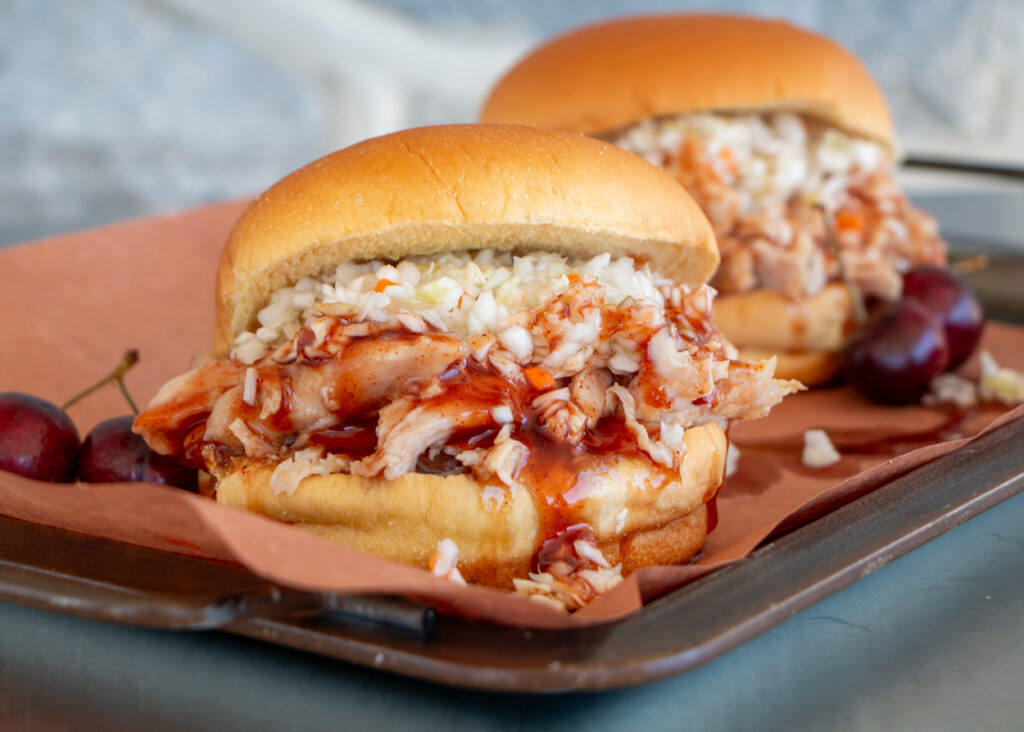
That revolutionary spirit—bold, optimistic, and unapologetically American—lives on in this vibrant summer sandwich. Built on Martin’s Potato Rolls (a Pennsylvania tradition in its own right), this recipe combines pulled smoked turkey with a tart cherry BBQ glaze and creamy slaw. Call it red, white, and barbecue: the cherry sauce adds a patriotic pop of color and a sweet-tart punch that creates that perfect balance.
Cherry trees were among the first fruit trees cultivated by American colonists, and turkey is as American as it gets. (A popular myth claims that Ben Franklin even lobbied for it to be our national bird!) The smoking and slow-cooking techniques we love today have roots in both indigenous traditions and colonial resourcefulness. This sandwich honors those founding flavors while delivering the kind of bold, complex taste that defines modern American barbecue.
If the Declaration of Independence was a statement of courage and vision, this sandwich is its culinary counterpart: brave enough to mix unexpected flavors, confident in its execution, and utterly satisfying.
Try the recipe: https://potatorolls.com/recipes/independence-day-cherry-turkey-sandwich
ERA 2: THE GREAT AMERICAN FRONTIER
Western Expansion / Gold Rush Era (1840s-1860s)
Frontier Breakfast Plate
In the mid-19th century, America was seized by a particular fever: the promise of opportunity just beyond the horizon. Whether it was gold in California, fertile land in Oregon, or timber in the Pacific Northwest, thousands of Americans packed up their lives and headed west. It was an era defined by grit, determination, and the belief that hard work could change your destiny.
The frontier required stamina. Days started before sunrise and stretched long into the evening. Whether you were panning for gold, felling trees, or building a homestead from scratch, you needed fuel, and lots of it. The hearty breakfast became not just a meal, but a ritual of preparation, a way to steel yourself for whatever the day might bring.
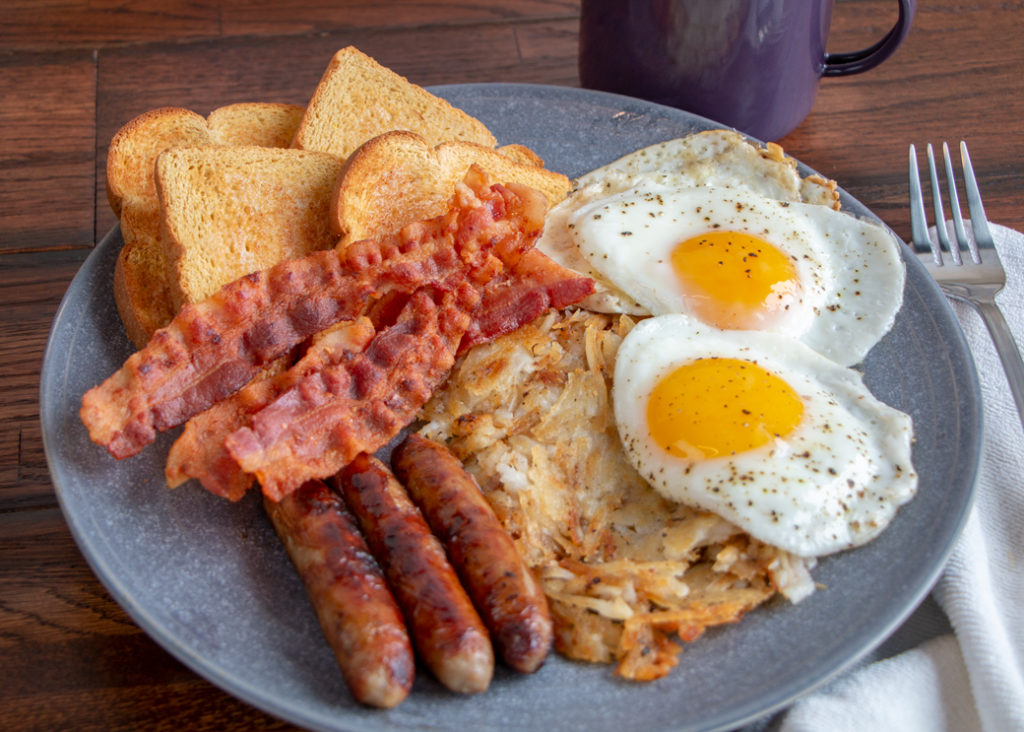
This Lumberjack Breakfast Plate honors that spirit with its no-nonsense approach to morning sustenance. Crispy bacon, savory sausage, perfectly cooked eggs, and thick slices of toasted Martin’s Potato Bread… It’s the kind of breakfast that sticks with you; the kind that says, “I’m ready for whatever comes next.”
The beauty of a meal like this is in its simplicity. There’s no pretension here, no fussy technique. Just quality ingredients, cooked well, served generously. It’s a plate that would’ve been at home in a logging camp kitchen or a Gold Rush tent, and it’s equally satisfying on a modern Sunday morning. Some things, like hard work, good food, and the promise of a new day, are timeless.
The frontier era reminds us that America has always been about possibility. And what better way to greet the day’s possibilities than with a breakfast that means business?
Try the recipe: https://potatorolls.com/recipes/lumberjack-breakfast-plate
ERA 3: CIVIL WAR/GILDED AGE
Civil War / Reconstruction / Gilded Age (1860s-1880s)
Liberty BLT
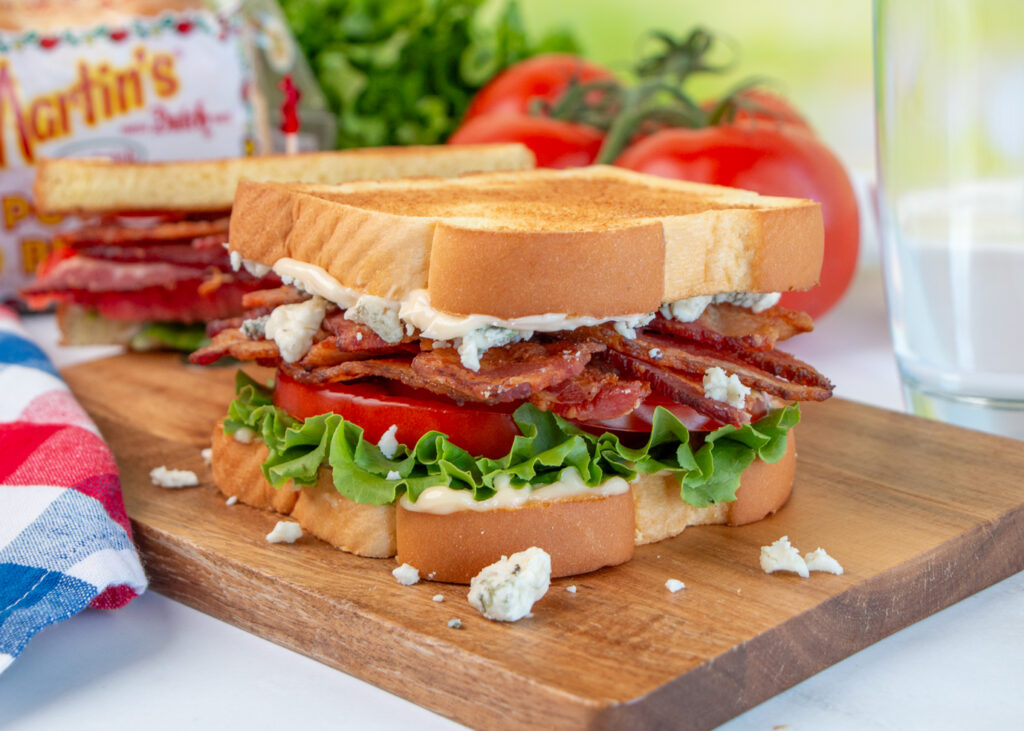
The decades following the Civil War were among the most transformative in American history. The nation had been fractured, tested, and was now painstakingly stitching itself back together. It was an era of both profound loss and remarkable progress, from the completion of the transcontinental railroad, to the expansion of industry and the beginning of what would come to be called the Gilded Age.
This period also saw the rise of American agriculture on an unprecedented scale. The railroad meant that ingredients could travel coast to coast. Heirloom seeds brought by immigrants took root in new soil. Regional specialties became national staples. Out of division came a new kind of unity—not uniformity, but a recognition that different traditions could coexist, and could even enhance one another.
The BLT is, in many ways, the perfect metaphor for this era. It’s a study in contrasts that shouldn’t work but somehow create perfect harmony. Thick-cut bacon: rich, smoky, indulgent. Heirloom tomatoes: bright and fresh; a connection to our agricultural heritage. Crisp lettuce for texture. And blue cheese mayo for a touch of unexpected sophistication that elevates the entire experience.
Like the nation itself during Reconstruction, this sandwich is greater than the sum of its parts. Each element maintains its distinct character (you can taste the bacon, the tomato, the tang of blue cheese) but together they create something unified and cohesive. It’s served on Martin’s Potato Bread, which provide the soft, sturdy foundation that holds it all together.
This era taught us that from complexity can come richness, that progress doesn’t mean erasing what came before. This sandwich carries that lesson forward: honor each ingredient and trust that together they’ll create something worth savoring.
Try the recipe: https://potatorolls.com/recipes/deluxe-blt
ERA 4: THE HOME FRONT
Victory Garden / WWII Era (1940s)
Home Front Spam Grilled Cheese
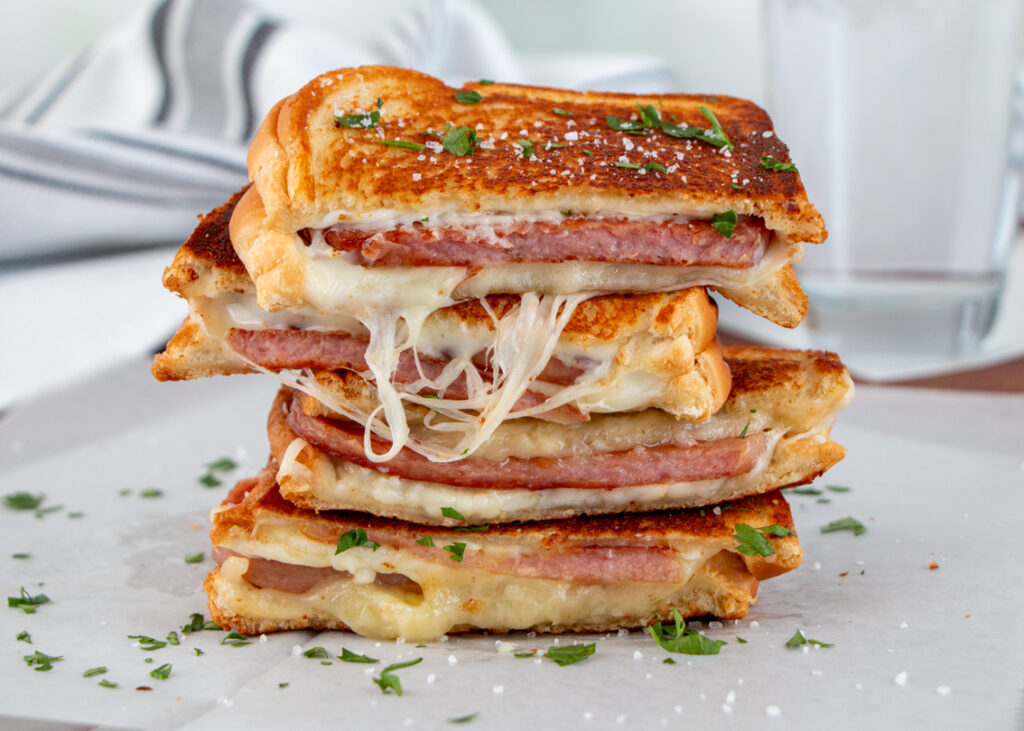
The 1940s tested America in ways few could have imagined. While millions of servicemen and women fought overseas, those at home faced their own challenges: rationing, victory gardens, and the daily question of how to feed a family when so many ingredients were in short supply.
Out of that necessity came remarkable ingenuity. Americans learned to stretch resources, to be creative with limited ingredients, and to find satisfaction in simple, well-made food. SPAM, introduced in 1937 and mass-produced for the military, became a staple both on the battlefield and on the home front. It was shelf-stable, protein-rich, and versatile. More importantly, it represented American resourcefulness at its finest.
Today, SPAM has experienced something of a renaissance. Chefs and home cooks alike have rediscovered what that wartime generation knew: when prepared well, it’s genuinely delicious. This Home Front Spam Grilled Cheese honors both the past and the present. Sliced SPAM is seared until golden and slightly crispy, then layered with sharp white cheddar and creamy mozzarella between two slices of buttery, toasted Martin’s Old-Fashioned Real Butter Bread.
The home front generation taught us that limitation doesn’t mean sacrifice, that creativity can flourish under constraint, and that humble ingredients can create something worth celebrating. This sandwich carries that lesson forward: respect your ingredients, don’t waste anything, and find joy in what you have.
Try the recipe: https://potatorolls.com/recipes/spam-grilled-cheese
ERA 5: ROUTE 66 / MID-CENTURY
The Highway Era / Mid-Century Americana (1950s-1960s)
Route 66 Road Trip Dog
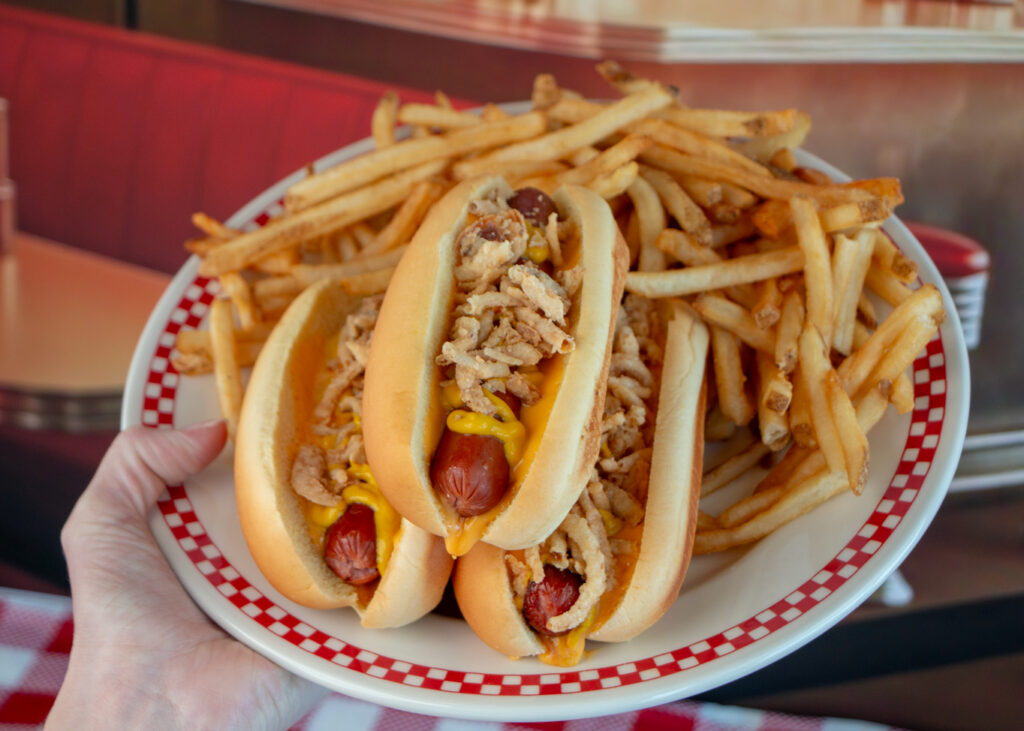
By the mid-20th century, America was on the move. The affordability of automobiles, a booming post-war economy, and a growing network of highways meant that suddenly, the open road was calling. Route 66 (a.k.a. the “Mother Road”) became a symbol of freedom, adventure, and the great American road trip.
Stretching from Chicago to Santa Monica, Route 66 wasn’t just a road; it was a cultural phenomenon. Families packed into station wagons for cross-country vacations. Veterans headed west looking for opportunity. Travelers from all walks of life found themselves sharing the same diners, motor courts, and roadside attractions.
Along that highway, a distinctly American dining culture emerged. Diners, drive-ins, and roadside stands served up quick, satisfying food that fueled long journeys and created lasting legacies. Chrome-trimmed counters, neon signs, and waitresses on roller skates became part of our collective memory. And at the center of it all? The humble hot dog, elevated to an art form.
This Route 66 Road Trip Dog captures that classic diner spirit with its crispy fried onions, tangy yellow mustard, rich cheese sauce, and diced pickles, all nestled in a Martin’s Long Potato Roll. It’s the kind of food that tastes like optimism, like endless summer days, and the promise of somewhere new just over the horizon.
This era may very well have cemented the connection between American food and American freedom—the freedom to hit the road, to chase adventure, to stop at a roadside stand and enjoy something delicious and uncomplicated. That sense of independence is what we’re celebrating today.
Try the recipe: https://potatorolls.com/recipes/route-66-hot-dog
ERA 6: BICENTENNIAL / 1970s
Bicentennial Summer / Backyard BBQ Era (1970s)
Bicentennial Burger
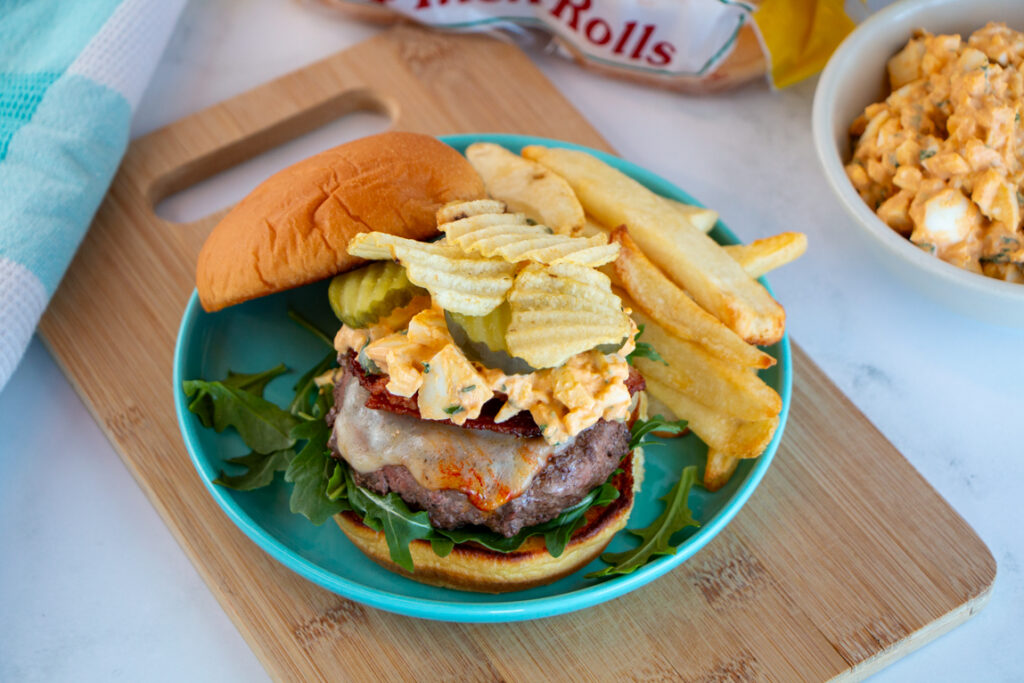
1976 was a year of celebration, reflection, and quintessentially American creativity. As the nation marked its 200th birthday, communities across the country gathered in backyards, parks, and town squares for the kind of casual, joyful celebrations that defined the decade. Fireworks, block parties, red-white-and-blue everything, and of course, food.
The 1970s were a golden age for backyard entertaining. The formal dinner party was giving way to something more relaxed and inclusive. Potlucks and picnics became the order of the day, and American cooks were feeling experimental. Why not combine a grilled burger with egg salad? Why not top it with crushed potato chips for crunch? If it tasted good and brought people together, it was worth trying.
This Bicentennial Egg Salad Burger captures that inventive spirit perfectly. It starts with a classic grilled burger: smoky, juicy, topped with melted Munster cheese. Then comes the unexpected: a generous scoop of creamy, tangy egg salad spiked with scallions, garlic, and smoked paprika. Crispy bacon, pickle chips, and yes, crushed potato chips for that captivating crunch. It’s served on Martin’s Sandwich Potato Rolls, which manage to hold this glorious tower of flavors without falling apart.
Is it unconventional? Absolutely. Is it delicious? Without question. That’s the beauty of American food culture in the 1970s, and really, American culture at large. We’ve never been afraid to try something new, to take two good things and see if they’re even better together.
The Bicentennial reminded us that being American means being willing to experiment, to celebrate, to gather around a table (or a picnic blanket) and enjoy the moment. This burger does exactly that. It’s playful, it’s hearty, and it’s a whole lot of fun.
Try the recipe: https://potatorolls.com/recipes/egg-salad-burger
ERA 7: MODERN AMERICA
Modern America / The America250 Moment (2020s-Present)
Featuring: Star-Spangled French Toast Casserole
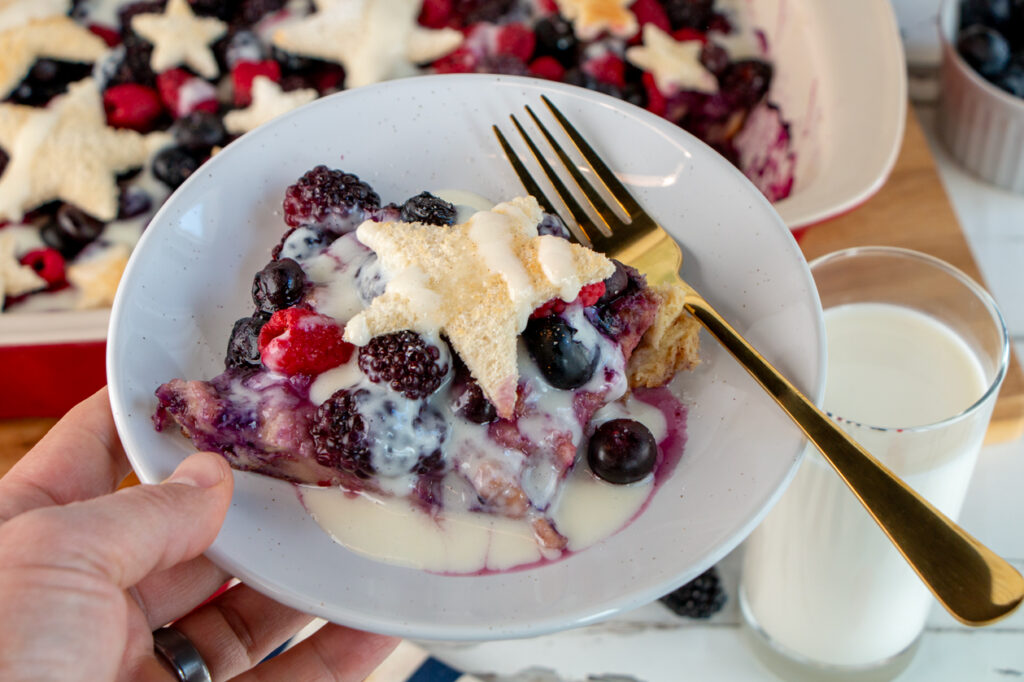
Here we are: 250 years after the Declaration of Independence, and America looks remarkably different than it did in 1776—or 1876, or even 1976. We’re more diverse, more connected, and more aware of both our triumphs and our shortcomings. We’ve learned that progress isn’t always a straight line, that unity doesn’t require uniformity, and that our differences can be sources of strength.
Today’s American food culture reflects that evolution. We celebrate local farmers and seasonal ingredients. We embrace global flavors while honoring regional traditions. We gather for brunch as readily as we do for dinner. And we’re not afraid to take a classic (like French toast) and make it into something celebratory, communal, and uniquely our own.
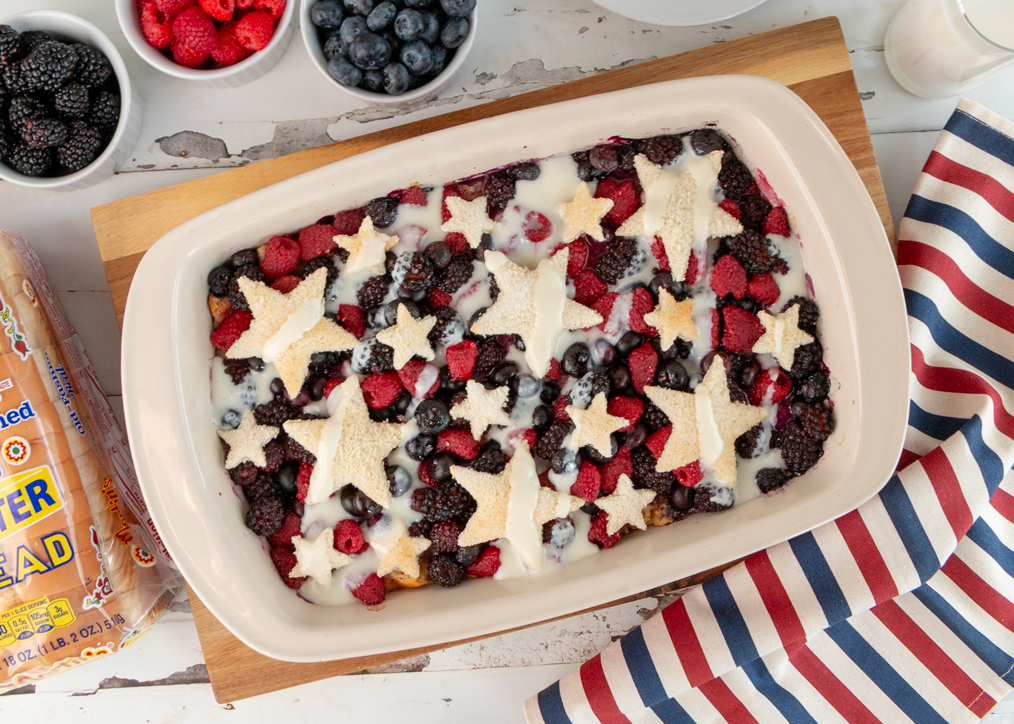
This Star-Spangled French Toast Casserole is the perfect symbol of modern American cooking. It starts with Martin’s Old-Fashioned Real Butter Bread, cubed and soaked in a sweet, vanilla-infused custard. Then comes the showstopper: star-shaped cut-outs arranged on top, surrounded by a vibrant mix of fresh berries—namely blueberries, raspberries, blackberries—and dotted with cream cheese. When it emerges from the oven, bubbling and golden, it’s almost too pretty to eat. Almost!
This is food meant for sharing, for gathering around a table with people you love, for creating the kind of memories that become part of your family’s story. It’s indulgent but approachable, impressive but not fussy. It honors tradition (French toast is a classic for a reason) while embracing creativity and celebration.
As we mark 250 years as a nation, this casserole reminds us that the best of American culture has always been about bringing people together, celebrating what we have, and looking forward with hope. Here’s to the next 250 years of shared tables, good food, and the belief that our best days are still ahead.
Try the recipe: https://potatorolls.com/recipes/star-spangled-french-toast-casserole
More America250 Celebration Recipes
Looking for even more ways to celebrate? These recipes capture the spirit of American innovation and flavor:
- Founding Fathers’ Fried Chicken Sandwich
- Yankee Doodle Pulled Pork Sandwiches
- Ultimate All-American Summer Burger
- Red, White & Bleu Burger
- Firecracker Burger
- America Burger Trio
- Home on the Range Mac & Cheese Burger
- July 4th Grilled Cheese
- Purple Mountain Majesty Grilled Cheese
- Ellis Island Picnic Sandwich
- American Flag Toast
- Red, White, and Blue Mini Buns
- Gold Rush Summer Corn Bruschetta
- Old Glory Trifle
- Stars & Stripes Hot Dog
Find more patriotic recipes in our Independence Day Recipes Archive.
A Plate Full of History, A Future Full of Promise
These recipes span 250 years of American history, but they share something essential: they’re all meant to be enjoyed together, with the people you care about. Because that’s what America has always been at its best: different backgrounds, different stories, different flavors, all coming together at the same table.
As we celebrate America250, we’re not just looking back at where we’ve been. We’re taking stock of who we are and imagining who we might become. And what better way to do that than by sharing good food, great company, and the kind of meals that turn into some of the best memories?
From all of us at Martin’s Famous Potato Rolls and Bread, here’s to 250 years of American ingenuity, resilience, and yes, delicious food. May the next 250 be just as flavorful.
Happy Anniversary, America!
Related Posts:
Our latest content, delivered straight to your inbox.
Be the first to hear about our newest recipes, tips, and company updates!